Mount Fuji and Kawaguchiko
Two hours west, the mountain shows itself when it wants to — mornings clearest, cold months best. Check the cams before you commit, reserve the train, pay the pagoda’s 400 steps, and carry a plan for the day Fuji hides.
The short version
- The Fuji Excursion limited express runs Shinjuku direct to Kawaguchiko in about 1 hour 55 on reserved seats that sell out weekends — booking through JR East covers the mainline leg — while the Shinjuku highway buses run the same corridor cheaper at similar times, unreserved anxiety included.
- The forecast rule per the alarm is the trip’s foundation: Fuji generates its own cloud and hides on roughly half of days, mornings run clearest before the mountain builds its afternoon cap, and the winter months deliver the best visibility odds of the year.
- The Chureito Pagoda — the five-storied vermilion pagoda above Shimoyoshida station — frames the classic Fuji-plus-pagoda postcard at the top of the alarm’s 400 steps, with April adding cherry blossoms to the composition and tripods to the platform.
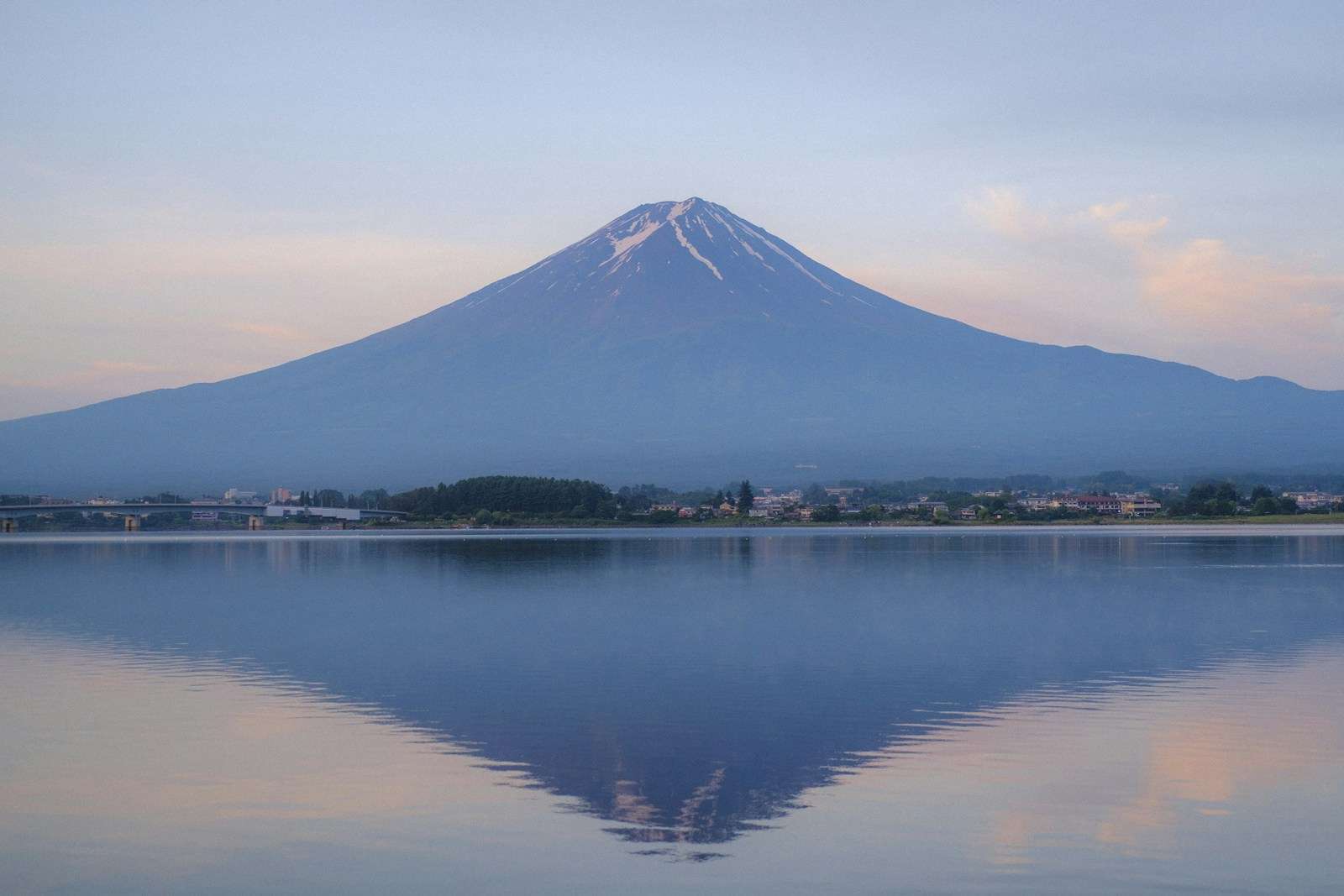
- Lake Kawaguchiko’s north shore runs the reflection viewpoints; the Mt. Fuji Panoramic Ropeway lifts to the Tenjōyama platform, and the sightseeing boats add the water-level angle — each a modest ticket, all Fuji-dependent by definition.
- The no-Fuji plan per the alarm has real material: the Itchiku Kubota kimono museum’s textile art, the Oshino Hakkai spring ponds’ village setting one bus on, onsen day-baths with lake windows, and hōtō noodles — the region’s iron-pot signature — as the weatherproof lunch.
- Climbing the mountain is a different trip entirely: the official season runs July–early September with its own logistics and reservation rules — this page is the looking-at-Fuji day, and the two should not be confused.

Getting there
The alarm’s sequence is the whole strategy: cams and forecast the night before and again at dawn, commit or convert, and board early — the Fuji Excursion’s reserved seats reward the weekday booking, while the highway bus’s price advantage meets its match in Friday-morning demand. Kawaguchiko station lands at the lake’s south end with the local sightseeing buses looping the viewpoints on day-pass terms; Shimoyoshida and the pagoda sit two stops back up the Fujikyu line, which the train ticket already rode through. The return trains and buses run into the evening — the sunset-from-the-north-shore hold is a legitimate plan with a booked seat behind it.
The day
Clear-day version: pagoda first while the morning haze is lowest — the 400 steps paid at temple pace, the postcard banked from the platform, the mountain enormous and obedient behind the vermilion tiers. Then the lake: the north-shore promenade’s reflection stretch, the ropeway-and-boat combination for the angles, and hōtō noodles steaming at lunch. The afternoon spends itself by temperament — Oshino Hakkai’s ponds, the kimono museum, or simply a bench with the mountain building its afternoon cloud on schedule. Hidden-day version: the same lake at moodier voltage, the museums and onsen carrying the middle, and the noodles tasting no worse — per the alarm’s no-Fuji plan, the day still lands, just without the summit’s signature. Both versions board the evening train with the reserved seat doing its quiet work.
When to go
November through February runs the visibility table — cold, clear mornings with the snowcap at full contrast, per the alarm’s photographer’s clause. April stacks blossoms under the snow line for the year’s most photographed fortnight; autumn’s maple corridor along the north shore (early-to-mid November) doubles the composition. Summer inverts everything: the mountain at its cloudiest, the climbing season underway, and the lake’s resort calendar at full occupancy. In every month the morning-versus-afternoon rule holds — Fuji is a sunrise-side commitment, and the alarm’s early start is the price of the postcard.
Frequently Asked Questions
What are the actual odds Fuji shows?
Honest banding: winter mornings run strong odds, summer afternoons run poor ones, and the year averages out near a coin flip — which is why the alarm builds the whole day on the forecast check rather than hope. The live cams answer the question in real time; trusting them is the skill.
Train or bus, really?
The Fuji Excursion for the reserved certainty and the one-seat ride; the highway bus for the price and frequency. Weekends flip the answer toward whichever you secured first — both sell out their mornings. The travel time difference is noise; the seat guarantee isn’t.
Is the pagoda climb hard?
About 400 steps on a maintained temple staircase — ten to fifteen minutes at conversation pace with landings for the winded. April’s blossom weeks add queue time at the platform itself; early arrival per the alarm beats both the haze and the tripods.
Can I see Fuji from Tokyo instead?
On clear winter days, yes — from towers and west-facing high floors, small on the horizon. The Kawaguchiko day exists because scale is the point: the mountain at forty kilometers fills the sky in a way no observation deck can sell. Hakone (documented on this network) offers the other classic Fuji-adjacent day with its own angles.
What about climbing it?
July to early September, its own logistics, reservations, and mountain-hut arithmetic — a night-climb culture with real altitude and real weather. It shares a mountain with this page and nothing else; conflating the two is the region’s most common planning error, per the alarm’s closing warning.