Kawagoe, Little Edo
Thirty minutes from Ikebukuro, Little Edo keeps a street of clay-walled merchant warehouses built not to burn — a bell that still rings four times a day, and the only surviving rooms of Edo Castle, moved here centuries ago.
The short version
- The Tobu Tojo line runs Ikebukuro to Kawagoe in about thirty minutes at commuter fares (Seibu and JR offer parallel routes), with the warehouse district a short bus hop or twenty-minute walk from the stations.
- The kurazukuri street is the headline: clay-walled, tile-roofed merchant storehouses in the fireproof style — rebuilt in earnest after the great fire of 1893 proved the style’s worth when the kura survived and lesser buildings didn’t — now shops, cafés, and a streetscape that explains the Little Edo name.
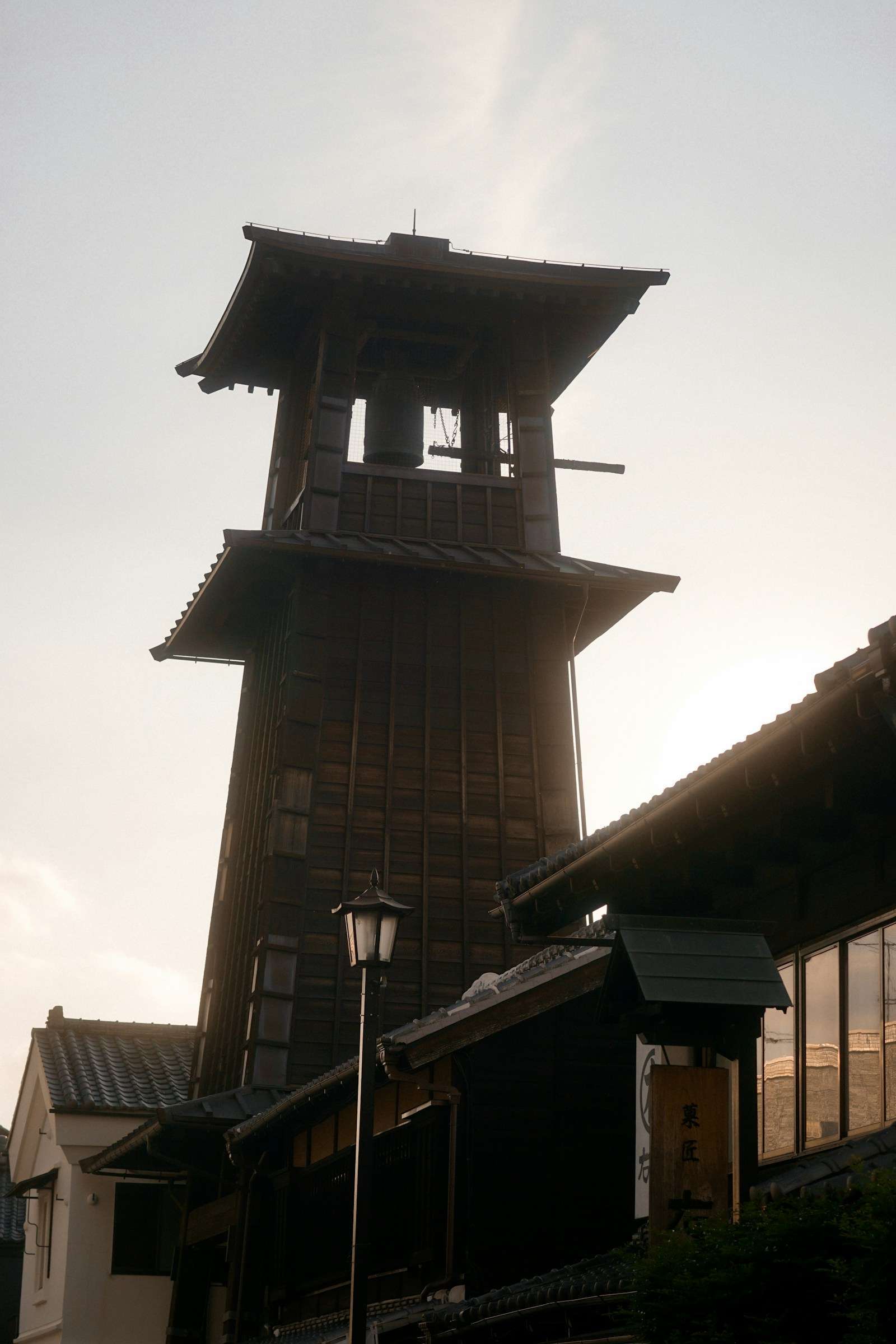
- The Toki no Kane bell tower — the town’s symbol, rebuilt after that same fire — still sounds four times daily (6 a.m., noon, 3 p.m., 6 p.m.), and hearing one of the middle two rings from the street is the visit’s small ceremony per the alarm.
- Kashiya Yokocho — the penny-candy alley — packs a lane with traditional sweet-makers: hard candies, dagashi, sweet-potato chips, and the browsing pace the alarm assigned it.
- Kitain temple carries the historical weight: when Edo Castle’s buildings were lost, the rooms previously moved here in the 1630s became the castle’s only survivors — the shogun-associated chambers tour on a modest ticket — alongside the Gohyaku Rakan: some 540 stone disciples carved over decades, every face different, tradition holding that one resembles yours.
- The sweet-potato identity per the alarm is total — imo ice cream, imo beer, imo kaiseki courses — and Hikawa Shrine adds the summer wind-chime corridor and matchmaking traditions for the season that gets them.

Getting there
The Tobu express is the simple answer — turn-up frequency, thirty-odd minutes, and discount day passes that bundle the local bus loop. The town walks flat and compact: station, warehouse street, candy alley, and Kitain form a loop under three kilometers. The alarm’s weekday rule is the one planning decision that matters — Saturday afternoons compress the main street to festival density, and the town’s charm runs inversely to it.
The day
Warehouse street first while the light rakes the clay walls: the kura facades, the shop interiors’ massive roof beams, and the Toki no Kane’s lane — position for the noon or 3 p.m. ring per the alarm and let the bell do its four centuries of work. The candy alley follows at browsing pace, then the sweet-potato lunch in whatever form the street offers you first. Kitain takes the early afternoon: the Edo Castle rooms’ painted screens and the third shogun’s birth chamber, then the rakan garden’s five hundred faces — laughing, sleeping, drinking tea — with the find-your-own-face tradition supplying the game. Hikawa Shrine closes the loop in season, its tunnel of wind chimes doing for summer what the warehouse street does for history. The return train runs you back before Tokyo notices you left.
When to go
The town works year-round with weekdays as the standing rule per the alarm. Summer brings Hikawa’s wind-chime festival (July–September, the shrine’s signature spectacle); mid-October brings the Kawagoe Festival — massive wheeled floats maneuvered through the warehouse street, one of the Kanto region’s great matsuri and the one weekend when the crowds are the point. New Year draws shrine traffic; sweet-potato season peaks with autumn harvest, when the imo economy runs fullest.
Frequently Asked Questions
Why did the warehouses survive when Tokyo’s didn’t?
The kurazukuri style — thick clay walls, heavy shuttered windows, tile roofs — was fire architecture, proven in Kawagoe’s 1893 blaze when the kura stood while ordinary wooden buildings burned. Merchants rebuilt the whole street in the style. Tokyo’s equivalents fell to the 1923 earthquake and 1945 fires, leaving Kawagoe the best surviving picture of the merchant Edo streetscape.
What exactly is at Kitain from Edo Castle?
Rooms transferred from the castle in the 1630s — including chambers associated with the third shogun’s birth and his wet nurse — moved when the temple was rebuilt under shogunal patronage. Edo Castle itself subsequently burned and was never fully rebuilt, making these interiors the only surviving castle rooms anywhere. The modest ticket covers them and the rakan garden.
Is the candy alley for children?
It’s for anyone with patience and a coin purse — traditional dagashi makers, hard-candy cutters, and sweet-potato snacks in a lane that’s more living craft street than theme attraction. Children love it; adults buy more than they admit. Weekday mornings browse best per the alarm’s crowd rule.
What’s the sweet potato thing about?
Kawagoe supplied Edo with sweet potatoes and never let the association go — the local satsumaimo is a point of pride, and the street runs it through everything: ice cream, chips, coffee pairings, full courses. The autumn harvest season is peak imo; trying at least one form is effectively the entry fee.
Kawagoe or Kamakura from Tokyo?
Kamakura (documented on this network) for the Great Buddha, temples, and coast at the longer ride; Kawagoe for merchant-town texture at half the distance. Religious-historic versus commercial-historic is the axis — and Kawagoe’s thirty minutes make it the better half-day when Tokyo’s schedule is tight.