Kamakura by the Sea
The samurai capital kept its temples, its bronze colossus, and a tram that skims the beach. An hour from Tokyo Station, and the weekday version is twice the trip.
The short version
- JR’s Yokosuka line runs direct from Tokyo, Shimbashi, and Shinagawa to Kamakura in about an hour — IC card, no planning; route details at jreast.co.jp.
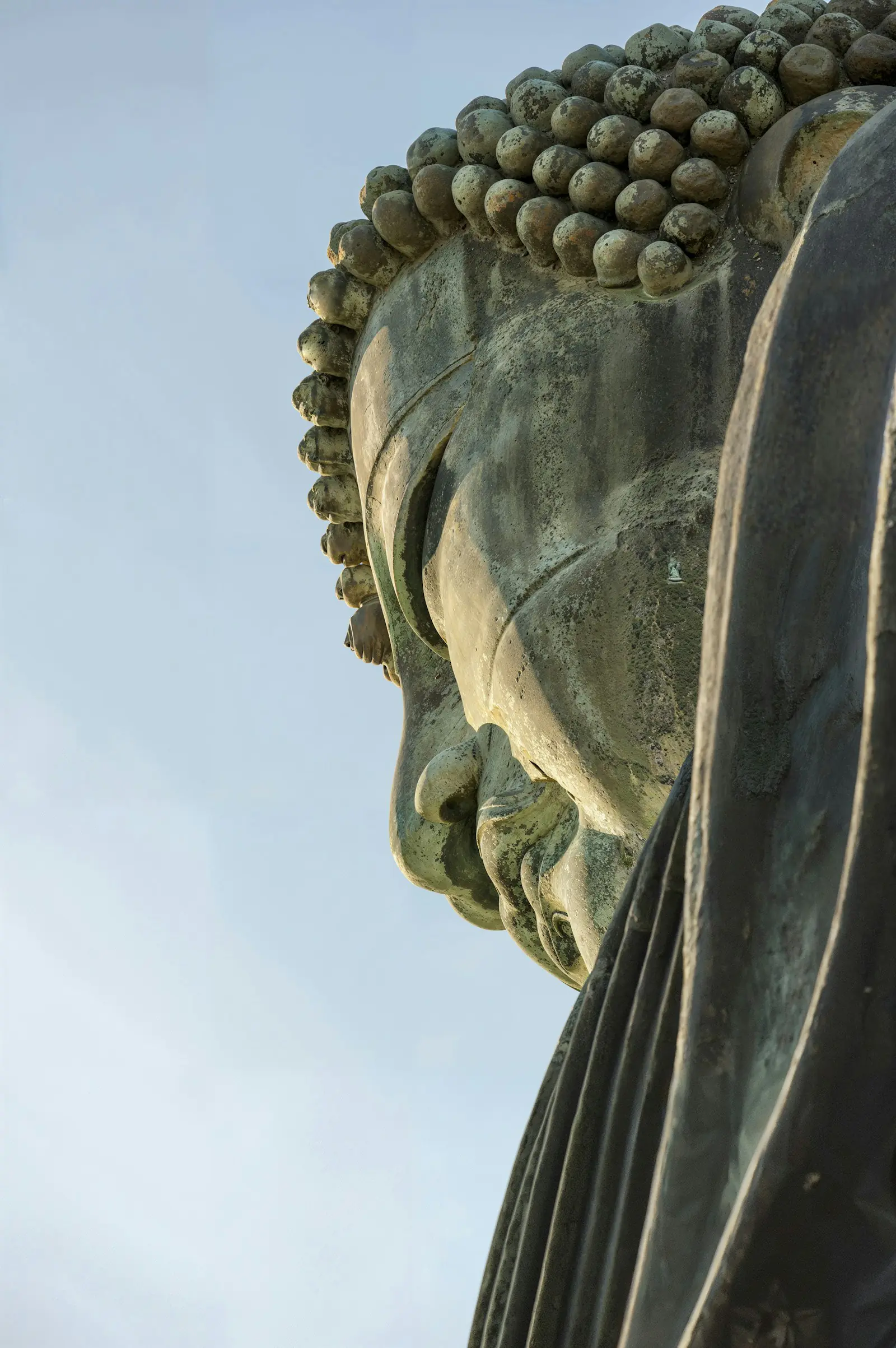
- The Great Buddha of Kamakura — 11 meters of bronze seated in the open since a 15th-century tsunami removed his hall — presides at Kōtoku-in for a small entry fee; temple information at kotoku-in.jp.
- Hase-dera, ten minutes’ walk downhill, layers a hillside: the eleven-headed Kannon, terraces over the bay, and June’s hydrangea path that draws its own pilgrimage.
- Tsurugaoka Hachimangū — the shogunate’s shrine — anchors the town’s ceremonial axis, approached down Wakamiya-ōji’s cherry-lined avenue or Komachi-dōri’s snack-shop parallel.
- The Enoden — a green two-car tram threading gardens, crossings, and open coastline — links Kamakura to Enoshima island and is transport, attraction, and film location in one.
- Enoshima itself adds a causeway island of shrines, caves, and Fuji sightlines on clear evenings — the extension that turns the temple day into a coast day.

Getting there
Board any Yokosuka-line train bound for Kurihama or Zushi at Tokyo Station’s underground platforms — Kamakura is about an hour, an IC-card tap, and zero strategy. Sitting on the right after Yokohama gives the first glimpses of hills. The Enoden’s little terminal shares Kamakura station; buy the day pass if the coast leg is in your plan, and note the alarm’s weekday counsel — this is greater Tokyo’s favorite easy escape, and Saturday knows it.
The day
Ride the Enoden three stops to Hase first: the Great Buddha before the buses, his hollow bronze interior open for pocket change, then Hase-dera’s terraces and Kannon as the town wakes below. Back in central Kamakura, take Komachi-dōri’s gauntlet of croquettes and crepes up to Hachimangū’s courts and gingko-flanked stairs. Give the afternoon to the coast: Enoden west along the beach crossings — surfers, Sagami Bay, the Kamakura-kōkō-mae crossing every anime fan photographs — to Enoshima for the causeway walk, the shrine stairs (escalators exist and charge), and, on clear days, Fuji over the water as the sun drops. Ride the tram back through the dusk; the trains to Tokyo run late and full of the pleasantly tired.
When to go
Kamakura works all year, which is its quiet superpower: November–December fires the gingkos and maples, June’s hydrangeas turn Hase-dera and Meigetsu-in into processions (book the crowds into your expectations), summer brings beach season to the Enoden’s windows, and winter’s clear air delivers the Fuji views. New Year’s hatsumōde floods Hachimangū with millions — a spectacle to join deliberately or skip entirely. The standing rule outranks all seasons: weekday if you can.
Frequently Asked Questions
Kamakura or Nikko from Tokyo?
Kamakura for temples-plus-coast ease at half the distance; Nikko for mountain baroque at full-day scale. Kamakura is the better half-day-to-full-day flex; Nikko demands and repays the commitment.
Is the Great Buddha worth it if I’ve seen Nara’s?
They’re different arguments: Nara’s sits vast in a hall, Kamakura’s sits weathered under open sky with the hills behind. Seeing both is comparing Japan’s two great bronzes, not repeating yourself.
What’s the Enoden day pass?
The Noriorikun covers unlimited Enoden hops — worth it the moment your plan includes Hase plus the coast. Buy at the Kamakura terminal machines.
How crowded is ‘crowded’?
Summer and autumn weekends mean queued tram platforms and shoulder-to-shoulder Komachi-dōri from late morning — still functional, not serene. Weekdays return the town to temple pace.
Should I include Enoshima?
On a clear afternoon, yes — the island’s shrine stairs, cave walk, and Fuji-over-water finale complete the coast. In haze or rain, bank those hours in Kamakura’s zen temples (Kenchō-ji and Engaku-ji, both excellent) instead.