Nikko from Tokyo
Ieyasu’s mausoleum in a cedar forest, two hours north — with a mountain road above it that doubles the day.
The short version
- Tobu limited expresses run from Asakusa to Tobu-Nikko in about two hours, all reserved; slower locals cost less and change en route. Passes and seats at tobu.co.jp.
- Tobu’s Nikko passes bundle the round trip with the local buses — the falls version of the day needs the bigger pass; compare before buying.
- Toshogu is the headline: Ieyasu’s shrine complex, the Yomeimon gate’s carving density, the sleeping cat, the three monkeys — gold leaf by the acre under old cedars. Official information at toshogu.jp.
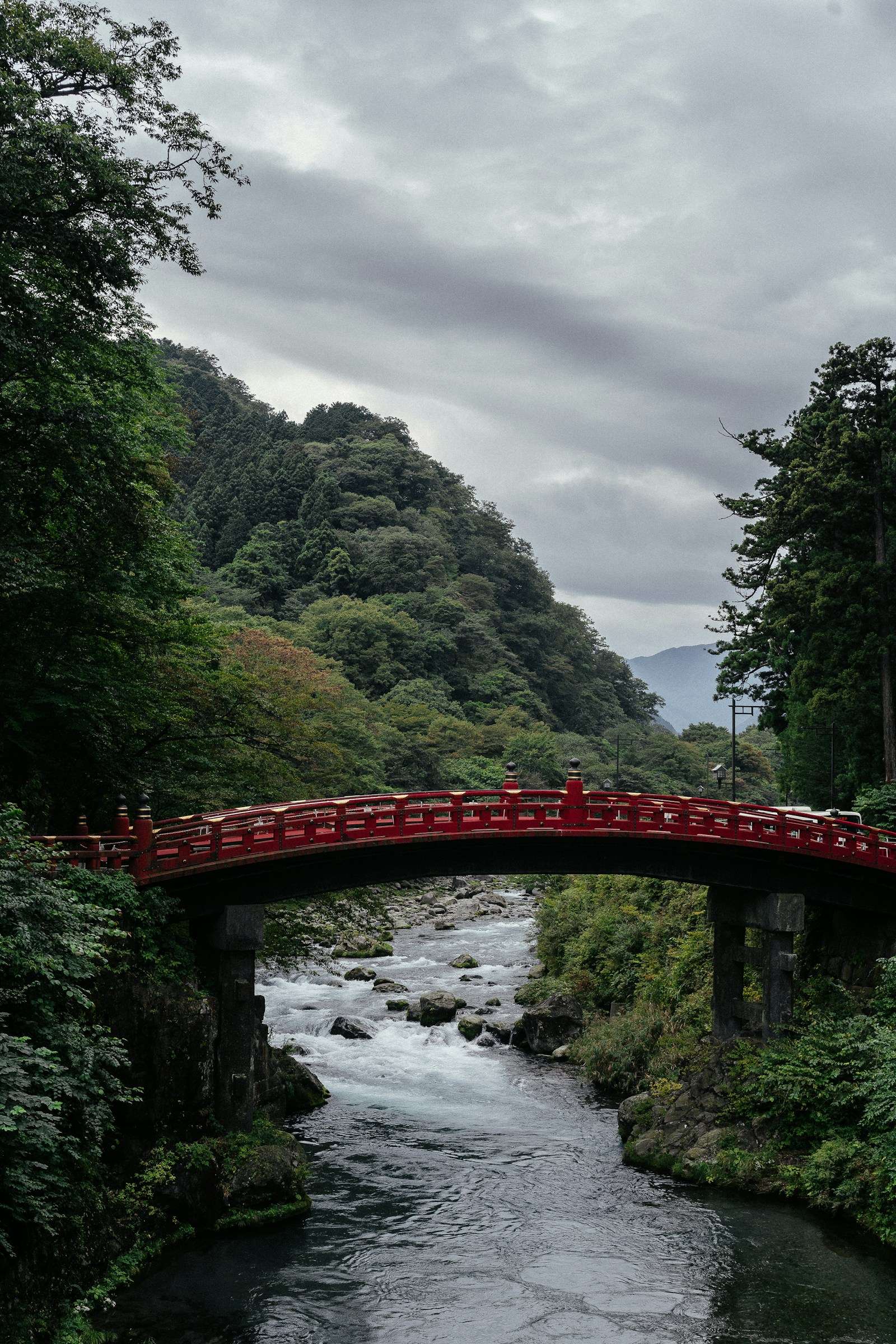
- The Shinkyo bridge photographs from the road for free; Rinnoji temple and Futarasan shrine share the same forest precinct.
- The mountain half: buses climb the 48 hairpins of the Irohazaka road to Lake Chuzenji and Kegon Falls, where an elevator descends to the basin viewing platform.
- Yuba — the local tofu-skin speciality — is the lunch Nikko does that nowhere else quite does.

Getting there
The Tobu limited express from its own Asakusa terminal is the straight answer: about two hours, reserved seats, and Nikko station a short bus ride or 20-minute walk below the shrines. JR runs an alternative via Utsunomiya for railpass holders. The Tobu passes bundle trains and the local buses that matter — the World Heritage loop for the shrine day, the wider pass when Chuzenji and the falls are in the plan.
The day
The shrine-only day is the relaxed one: Toshogu deep and slow — the museum too — then Futarasan and Rinnoji through the cedars, the Kanmangafuchi abyss walk with its row of stone Jizo if legs want more, and yuba lunch in town. The both-halves day starts on the first train: shrines by 9:30, the 11-something bus up Irohazaka, Kegon Falls and the lakeshore, and the descent before the road clots. In November, that descent is the whole gamble — the alarm has the rest.
When to go
Late October through mid-November is the famous version: the mountain half in full color and full gridlock. May and June give fresh green, waterfalls at volume, and working traffic. Winter strips the crowds, dusts the shrines, and freezes Kegon into ice columns — the sleeper season for photographers with warm boots. Summer is green, humid, and fine, with afternoon-storm roulette.
Frequently Asked Questions
Shrine day or falls day?
With one relaxed day: the shrines. With an early start and a weekday: both. In peak foliage: pick one and mean it — the road decides otherwise.
Which pass should I buy?
Tobu’s smaller Nikko pass covers the town-and-shrines day; the larger one adds the Chuzenji buses. Price them against your actual plan at tobu.co.jp.
Is Toshogu worth the entry?
Yes — it is the most elaborate shrine complex in Japan, and the carving survives every photograph of it. Give it ninety minutes, not thirty.
How bad is autumn traffic really?
The Irohazaka hairpins can run over an hour of stop-start each way on peak weekends. Midweek halves it; the first morning bus mostly beats it.
Can I see Kegon Falls without the elevator?
The free upper platforms give the wide view. The paid elevator drops to the basin, where the 97-meter column lands in your chest. In ice season, that is the ticket to buy.